


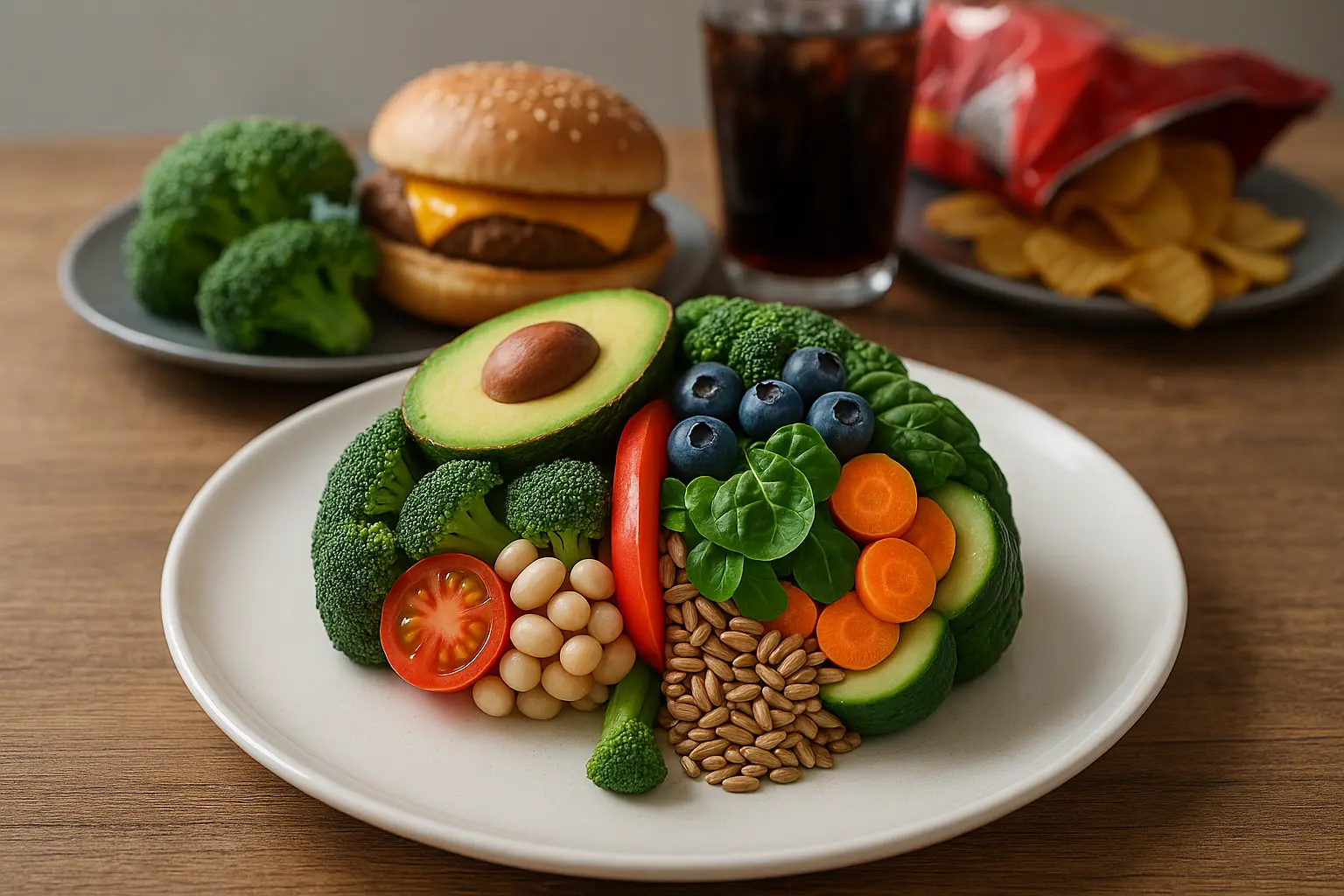
Beyond calories: how ultra-processed foods, refined flours, white rice, and processed meats affect your mental health (and what you can start doing today)
Why are we talking about processed foods and the brain in 2025?
In Spain, 31 % of the calories we consume come from ultra-processed foods (UPF): sugary drinks, pastries, salty snacks, industrially produced bread, and cured processed meats.
A 2024 umbrella review found that a high intake of UPF is associated with 22 % more depression and 19 % more anxiety.
The blood glucose spikes caused by refined flours and rice activate the adrenergic “up-and-down” cascade and worsen mood.
In other words: your microbiota, inflammation, and emotional stability are linked to what is on your plate, not just to the scale.
An iconic case: the hamburger that “does not age”
In 2009, an Icelandic traveler bought the last hamburger McDonald’s sold in the country and placed it in a display case; today, 16 years later, it shows barely any visible signs of decomposition and can be watched on a 24/7 livestream.
Why does this happen?
| Factor | Explanation | Link to mental health |
|---|---|---|
| Low water content | Meat cooked at a high temperature + a very dry bun; it dehydrates into a “mini-crust” and slows bacteria and mold. | The food reaches the gut with virtually no fiber or moisture → provides little nourishment for “friendly” microbiota. |
| High salt and preservative load | Salt and calcium propionate in the bread inhibit fungi. | Excess sodium and additives are linked to gut dysbiosis and neuroinflammation. |
| Ultra-refined flour and saturated fat | Ingredients with a very low satiety index; they encourage repeated eating. | Glucose/insulin spikes → mood swings and more cravings for “comfort food.” |
The moral: if neither bacteria nor fungi “want” a food over 15 years, will it really “nourish” your brain tomorrow?
The latest we know (2024-2025)
| Study | Design / N | Key finding |
|---|---|---|
| 2024 BMJ umbrella review | 45 studies, >10 M people | UPF ↑ depression risk 22 % and anxiety 19 %. |
| 2025 carbohydrate meta-analysis | 17 controlled trials | High glycemic load ↗ stress and ↓ sleep quality; fiber is protective. |
| 2024 European “processed meat” cohort | 93,000 adults | >70 g/day of processed meat ↑ depressive symptoms 18 %. |
Signs that your diet is undermining your mood
- An energy high and crash 2-3 h after meals rich in bread or white rice.
- A midafternoon energy slump “cured” with a soft drink.
- Nighttime cravings for salty snacks.
- Frequent abdominal bloating after processed foods.
With 2 or more, your gut and glucose-cortisol axis need adjustments.
Four practical steps based on evidence
| Step | What to do | Why it works |
|---|---|---|
| 1 | “Buckwheat instead of white flour” | + Fiber and magnesium → fewer blood glucose spikes; modulates microbiota. |
| 2 | 50-50 rice + cooling | Resistant starch ↓ glycemic index, ↑ butyrate production (anti-inflammatory). |
| 3 | “Processed-meat-free Friday” | ↓ nitrates and salt; ↑ omega-3 and tryptophan. |
| 4 | The 3-3-12 window | Stabilizes insulin, improves melatonin and daytime mood. |
Quick TIP: ask yourself, “Would this food survive 15 years without rotting?” If the answer is “probably yes,” save it for exceptional occasions.
Frequently asked questions
| Question | Brief answer |
|---|---|
| Is white rice always bad? | No, but combine it with protein/vegetables and cool it to create resistant starch. |
| Is industrially produced “whole-wheat” sandwich bread okay? | It is usually UPF (sugar + oils); look for whole-grain sourdough or homemade bread. |
| Is vegan processed meat better? | It is usually UPF as well; fresh legumes, tofu, or minimally processed tempeh are better. |
| Are omega-3 capsules enough? | They are useful, but the overall dietary pattern accounts for most of the benefit. |
Next steps with our clinic
- The “Nutri-Mente” checkup (30 min online): we identify UPF, glycemic load, and inflammatory profile.
- The “Mind-Low-GI” plan: a 14-day menu, simple whole-grain recipes, and a guide to avoiding processed foods.
- Hybrid follow-up: monthly 30 min in-person reviews to reinforce changes and avoid a return to ultra-processed foods.
“If a food can ‘last forever,’ your emotional well-being will last less time. Choose living ingredients, rich in fiber and free of additives: your gut and brain will thank you.”
*Informational article; it does not replace an individual clinical assessment.*


