


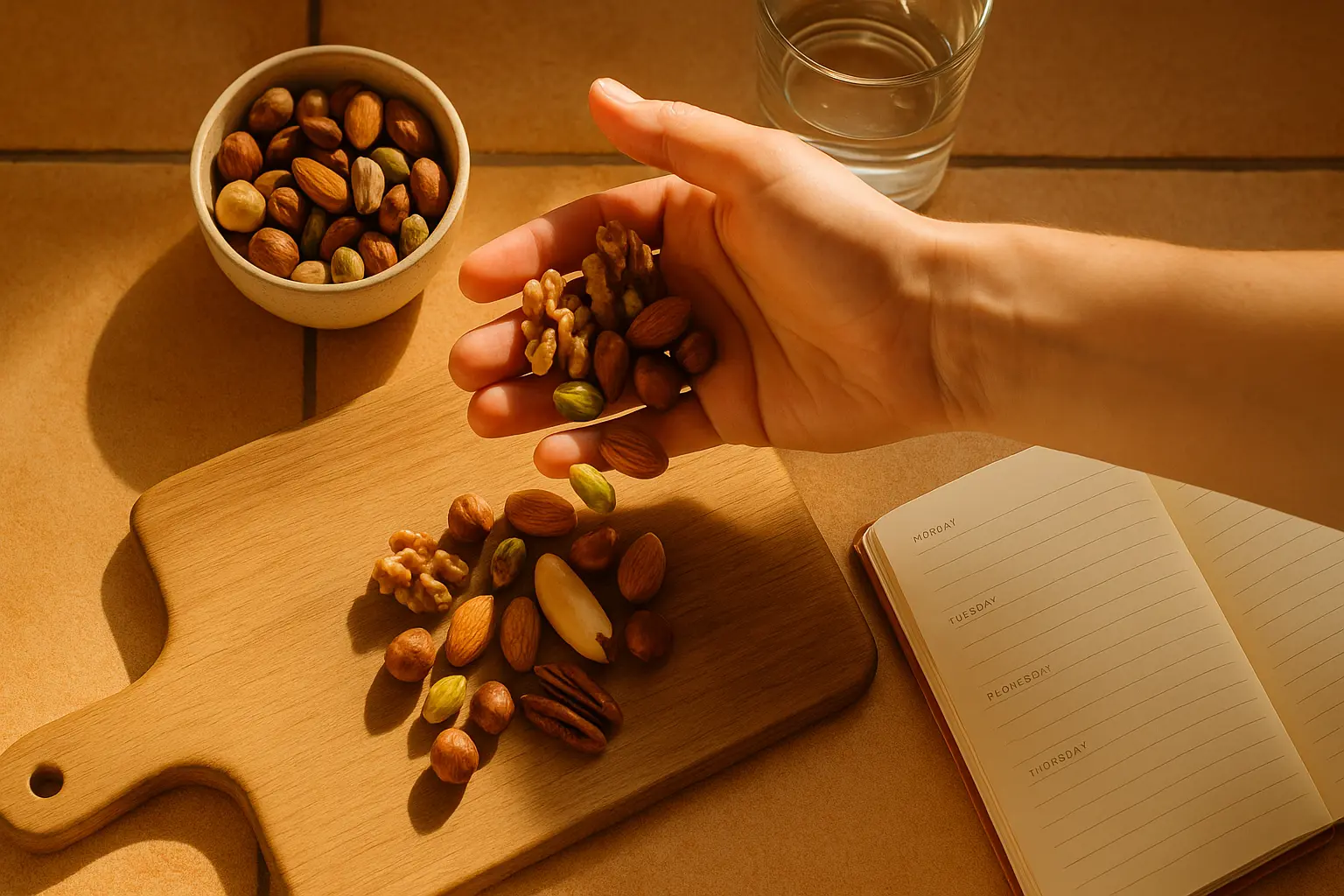
Nuts in fall: the handful that improves heart health, mood, and (surprise) your sleep
A practical guide with science and easy everyday tips · Dr. Marc Agraz · Psychiatry and mind‑body integration

Why now
September and fall are times to “reset”: routines return, stress rises, and daylight hours decrease. This is exactly where a tiny step—a handful of 20–30 g of nuts a day—can make a difference in energy, concentration, and metabolic health. It is a micro‑intervention with excellent evidence: inexpensive, portable, and delicious. The icing on the cake: some walnuts may improve sleep quality if you have them with dinner.
What science says (clear and to the point)
WOW #1 · Metabolic ward trial (NIH): 2 weeks on an ultra-processed vs. unprocessed menu, matched for calories and macros. With UPFs, participants ate +508 kcal/day and gained +0.9 kg. It is not (just) willpower: the formulation encourages eating more.
Heart protection
In PREDIMED, a Mediterranean diet + 30 g/day of mixed nuts reduced major cardiovascular events compared with a low-fat diet.
Lower lipids
Meta-analysis: ↓LDL, ↓ApoB, ↓triglycerides without affecting HDL. It does not depend on a single type of nut.
Weight: less than it seems
Human calorimetry: with almonds and walnuts, about20–30 % less energy is absorbed than the “label” states. High satiety.
Microbiota benefits
Walnuts/almonds ↑ butyrate and beneficial bacteria; a systematic review found a positive effect without worsening digestive symptoms.
Mood and mental health
UK cohort: up to 30 g/day ↔ −17 % risk of depression at 5 years (association ≠ causation).
Sleep (new in 2025)
Crossover RCT: 40 g of walnuts with dinner improved sleep quality, shortened sleep latency, and ↑ nighttime melatonin metabolites.
Cognition: useful realism
WAHA (2 years with walnuts): no overall cognitive benefit; signals in subgroups. They contribute as part of a Mediterranean eating pattern.
Which nut for each goal?


Servings, frequency, and the handful rule
- Standard serving: 20–30 g (a handful). Preferably without added salt or sugar.
- Frequency: 3–7 servings/week (ideally 1/day). Official recommendations in Spain (AESAN).
- Quick tip: a visible jar with a 30 g scoop; 5 small bags for the week; a gentle reminder after lunch.
7 ways to include them today (5 minutes or less)
- A peaceful evening: 30–40 g of walnuts with dinner (e.g., warm pumpkin salad + lamb’s lettuce + fresh cheese).
- Midmorning coffee: almonds + fruit.
- A crunchy breakfast: plain yogurt + pistachios + raspberries.
- An anti‑stress topping: 1 tbsp of cashew butter on whole-grain toast + cinnamon.
- “Breaded” hake without flour: ground hazelnuts + herbs, baked.
- A mindful snack: in-shell pistachios in the car/office (you eat more slowly and less).
- A minimalist dessert: a piece of dark chocolate + pecans.
Honest FAQ
Are they fattening?
Less than they seem: with almonds and walnuts, measurements show ~20–30 % less energy absorbed than the “label” states. If they replace pastries/snacks without being added on top, they do not promote weight gain.
Are raw or salted nuts better?
Raw or roasted, without salt or sugar. Salt “hijacks” cardiovascular benefits.
I have a history of kidney stones. Can I eat them?
Yes, with some caveats: almonds/cashews are higher in oxalate; pistachios and walnuts have moderate levels. Have them together with calcium (yogurt, fresh cheese, calcium-rich vegetables), stay well hydrated, and moderate large amounts if you have had a calcium oxalate stone.
Do they really improve sleep?
A 2025 RCT found that 40 g of walnuts with dinner improved sleep quality and ↑ nighttime melatonin metabolites. This does not replace sleep hygiene or insomnia treatment, but may help.
Are they useful for depression?
They are not a treatment on their own. However, eating up to 30 g/day was associated with −17 % risk of depression over the medium term in cohorts. Clinical judgment comes first; they can be part of a comprehensive plan.
Safety in two lines: 1) Allergies: if you suspect a nut allergy, do not try them on your own. 2) Selenium (Brazil nuts): 1–2 nuts/day are enough; avoid chronically excessive intake (UL 400 µg/day).
A “frictionless” weekly plan (template)
- Mon–Fri: 1 serving/day, alternating walnuts, almonds, pistachios, and hazelnuts.
- Saturday: a recipe with nuts (pistachio pesto, hazelnut “breading,” cashew sauce).
- Sunday: rest or an extra serving if you did not reach 5–7/week.
Key references: PREDIMED (NEJM); lipid meta-analysis (MDPI); actual calories absorbed from almonds/walnuts (PubMed); microbiota (trials + review); UK Biobank (Clinical Nutrition Journal); 2025 RCT on walnuts and sleep (RSC); AESAN and Spanish Ministry of Health recommendations; selenium safety (ODS/NIH).
Educational information; it does not replace an individual medical assessment or prescribed treatment.


