


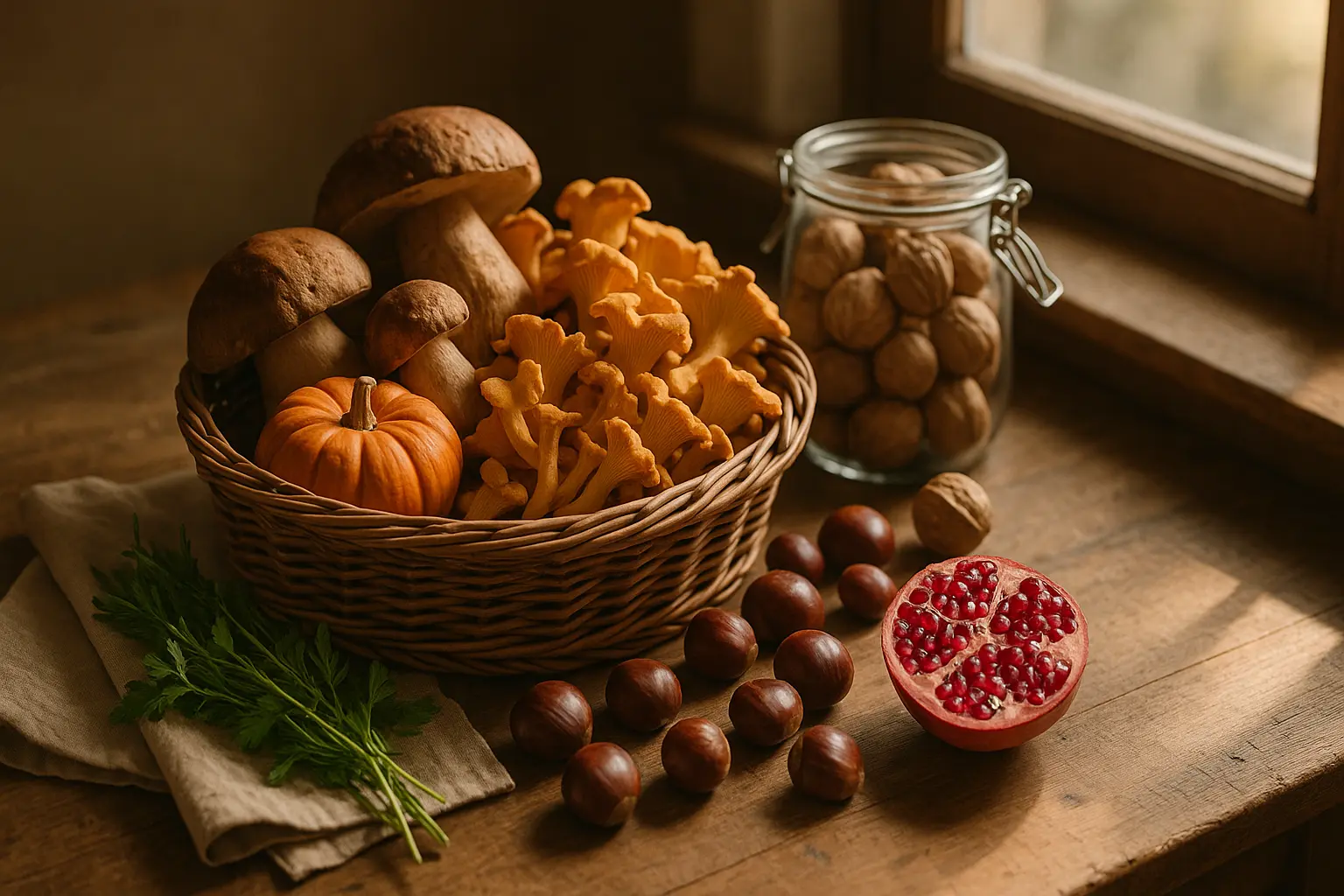
Fall on your plate: 9 seasonal foods that support your mood, sleep, and focus
(and a 10-day plan to really notice the difference)

The key idea is simple: fall brings foods that stabilize energy, nourish the gut microbiota, and provide compounds showing interesting signals for mental health (polyphenols, omega‑3s, ergothioneine, tryptophan…). Here is what to choose, why and how to use it.
1) Mushrooms (saffron milk caps/rovellons, porcini, button mushrooms): fall’s nutrient boost for the mind
Rich in ergothioneine, a dietary antioxidant found almost exclusively in fungi, with growing neurological interest. Observational studies suggest lower odds of depression among regular consumers (a consistent, reassuring signal; it does not prove causation).
How to use them: grill with garlic and parsley + an egg (choline). Safety note: if you are not an expert, buy them instead (do not forage).
WOW · In >24,000 adults (NHANES), higher mushroom consumption ↔ lower odds of depression. Ergothioneine is the number one “suspect.”
2) Pumpkin + pumpkin seeds: an evening soup + a topping that supports sleep
Pumpkin provides fiber (blood glucose stability), and the seeds add magnesium + tryptophan. Having them at night with a gentle carbohydrate source (the soup) may improve the availability of tryptophan to the brain.
How to use it: pumpkin soup with 1–2 tbsp of seeds dry-roasted without salt + warm lighting at home.
3) Walnuts: the handful that improves sleep (and provides ALA)
2025 RCT: 40 g with dinner increased the main urinary metabolite of melatonin and improved sleep quality (a randomized crossover trial). They can help as an adjunct (they do not replace sleep hygiene). They also provide ALA (a plant-based omega‑3).
How to use it: 30–40 g with dinner or as dessert with fruit.
WOW · A handful of walnuts at night ↔ ↑ melatonin and better sleep in an RCT (2025).
4) Chestnuts: slow-release carbohydrates and vitamin C for long afternoons
Unlike other nuts, they are rich in complex carbohydrates and have a low GI (~54): steady energy without a “spike and crash,” helpful for mood and focus. They also provide vitamin C.
How to use them: roasted or in soups/side dishes (a serving of ~50–60 g, peeled).
5) Sweet potato and pumpkin: gentle sweetness without the roller coaster
They are filling, provide carotenoids and support a smooth blood glucose profile → fewer nighttime cravings. The sleep‑glucose‑craving cycle works both ways: better sleep and better eating reinforce each other.
6) Kiwifruit and early citrus (mandarins): vitamin C and a sleep boost
A classic RCT: 4 weeks of kiwifruit at night improved sleep latency and total sleep time. Trials in athletes also suggest better rest.
How to use it: 1 kiwifruit 60–90 min before bed (if you do not have reflux).
WOW · 1–2 kiwifruit at night → falling asleep sooner and sleeping longer (RCT).
7) Fall fermented foods (yogurt/kefir, fermented cabbage): microbiota + inflammation
RCT (Cell, Stanford): 10 weeks of a diet high in fermented foods ↑ microbial diversity and ↓ multiple inflammatory markers. Good news for the brain and mood.
How to use them: 1 serving/day of yogurt or kefir; add sauerkraut/artisan pickles (low salt) if tolerated.
8) Saffron (Crocus sativus): Spain, October–November, and evidence for mood
Meta-analyses and trials in mild‑to‑moderate depression suggest benefit versus placebo and results comparable to SSRIs in some analyses (heterogeneous evidence). Use it as an adjunct.
How to use it in cooking: broths, rice dishes, or infusions (culinary use ≠ a therapeutic dose). Harvest in La Mancha: October 20–mid-November.
9) Small oily fish (sardines, mackerel, anchovies; convenient canned options): EPA/DHA support
2024–2025 reviews: omega‑3s (especially EPA) may help as an adjunct in depression (variable evidence). Eating fish 2–3 times/week is a sound choice, without the “rebound effect” of poorly planned supplementation.
How to use it: canned in EVOO on whole-grain bread with tomato; or baked sardines.
A point that gives “eating seasonally” meaning: in traditional societies, the microbiota changes with the seasons according to diet; that diversity has been lost with modernity. Eating a varied, seasonal diet may steer your microbiota in a positive direction.
A quick 10-day plan (so you can notice the difference)
Goal: boost energy and focus, sleep better, and reduce nighttime cravings.
Day 1
Dinner: pumpkin soup + 1–2 tbsp of seeds. Warm lighting mode at home.
Day 2
30–40 g of walnuts with dinner. Record your sleep latency of sleep.
Day 3
Sautéed mushrooms + an egg at lunch. Notice your focus in the afternoon.
Day 4
Have 1 kiwifruit 60–90′ before bed.
Day 5
Yogurt/kefir with fruit + pistachios or almonds.
Day 6
Roasted chestnuts (50–60 g) as an afternoon snack → steady energy.
Day 7
Dinner with sardines (in EVOO) + whole-grain bread and tomato.
Day 8
An infusion with saffron threads in the afternoon (culinary use). For nutraceutical use: consult a professional.
Day 9
Repeat your favorite fermented food (yogurt/kefir + fruit).
Day 10
Evaluate: are you falling asleep sooner?, fewer nighttime cravings?, more focus? Keep what worked.
Quick questions (FAQ)
Can I notice a difference in 1–2 weeks?
Yes. Sleep and energy often respond quickly (walnuts/kiwifruit/dinner routines), and cravings decrease as glucose and the microbiota stabilize.
Is saffron a “natural” antidepressant?
Trials and meta-analyses show favorable results in mild‑to‑moderate depression; the evidence is heterogeneous. Use it as an adjunct, not as a substitute for therapy/medication.
Is canned fish useful?
Yes, especially in EVOO: convenient and rich in EPA/DHA. Clinical evidence varies, but as part of an eating pattern, it helps.
Key sources: Observational studies on mushrooms and depression (NHANES); 2025 RCT on walnuts and sleep; RCT on kiwifruit and sleep; RCT on fermented foods (Cell, Stanford); GI data for chestnuts; 2024–2025 reviews of omega‑3s and depression; reviews on tryptophan and sleep; notes on seasonality and the microbiota (Science).
Educational information; it does not replace an individual medical assessment or prescribed treatment.


